
A Sentinel Oak
Some trees are more than wood and leaves. They are guardians, witnesses, and quiet companions. Their fall is not merely the loss of a tree, but the closing of a chapter written in shade, birdsong, and seasons.
One of Knoxville’s most majestic trees — a massive southern red oak (Quercus falcata) estimated to be 150 to more than 200 years old — graces the front yard of the historic Howell House Visitors Center. Since a time even before Joe Howell built his family home and nursery offices, she has stood watch over the Howell Nurseries, which operated on the Garden grounds from the late 1780s until 2002, when Knoxville Botanical Garden and Arboretum was established to continue caring for this special place.
Southern red oaks typically live 150 to 300 years. When our oak began showing signs of decay and root rot over the past decade, a dedicated team of arborists started treatments to protect her health for as long as possible. Sadly, she has reached a turning point where we have made the difficult but responsible decision to remove her in the coming days. Having done all that we can to extend her life, it is imperative to act now before her continued and imminent decline poses a threat to the safety of guests, staff, and historic structures.
As stewards of Knoxville Botanical Garden and Arboretum, we are honoring her legacy by respectfully repurposing her wood for education and for use by local artisans.
What Affected the Tree
The oak was weakened by two conditions. Inonotus is a wood-decay fungus that attacks the roots and lower trunk. Phytophthora is a soil-borne pathogen that causes root rot. Together, they decayed the tree’s roots and trunk and kept her from growing new roots to replace the ones she lost.
Caring for Her to the End
For many years, Davey Tree Expert Company has partnered with us to assess and care for the oak. Their arborists fertilized her to strengthen her vigor, applied growth regulators to manage her size and reduced her crown to lighten the weight on her limbs. Their expertise and proactive care gave all of us the gift of additional years to admire her magnificence, and we are deeply grateful.
When Is It Time to Remove a Tree?
Removing a beloved tree is never easy, but sometimes it is the safest choice. Arborists look at both the tree’s condition and what lies beneath it, such as people, homes, paths, or power lines. Warning signs include:
Mushrooms or shelf-like fungi growing at the base or on the trunk, which often signal internal decay
Large dead branches, or thinning and dying leaves in the upper canopy
Deep cracks, splits, or hollow cavities in the trunk
A sudden or worsening lean, or soil heaving or cracking around the base
Damaged, decaying, or severed roots
Many problems can be managed with pruning, cabling, or treatment. When the risk can no longer be reduced to a safe level, removal protects the people and places around the tree. If you’re concerned about a tree at home, have it evaluated by an ISA Certified Arborist. Look for one with Tree Risk Assessment Qualification (TRAQ) if possible.
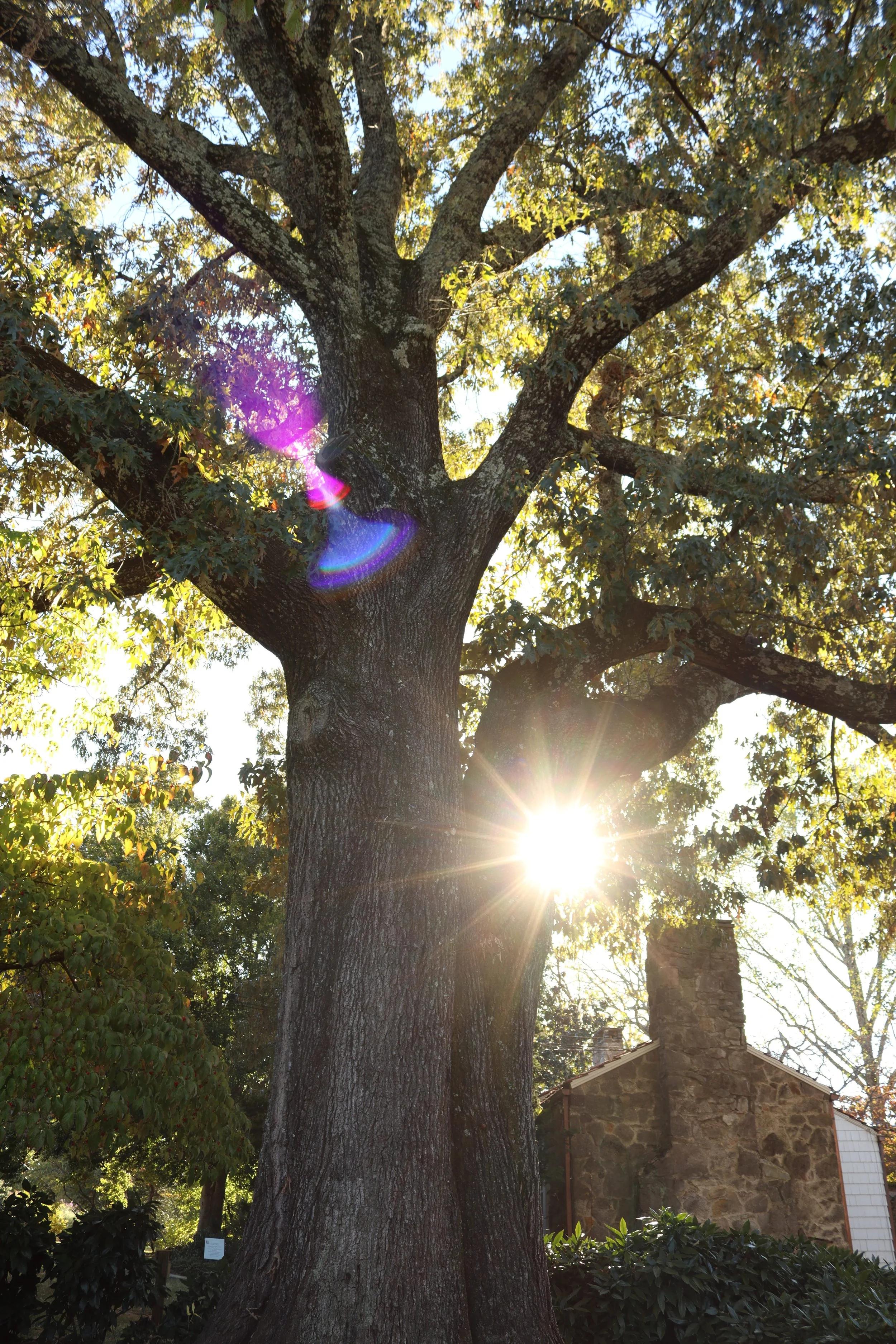
The Oak’s Next Chapter
Our oak’s story isn’t over. We are developing educational materials from her wood and history, and local artists are creating new works from her timber. Check back on this page for updates, and follow us on Instagram at knoxgarden or sign up for our newsletter below to see how her legacy lives on.
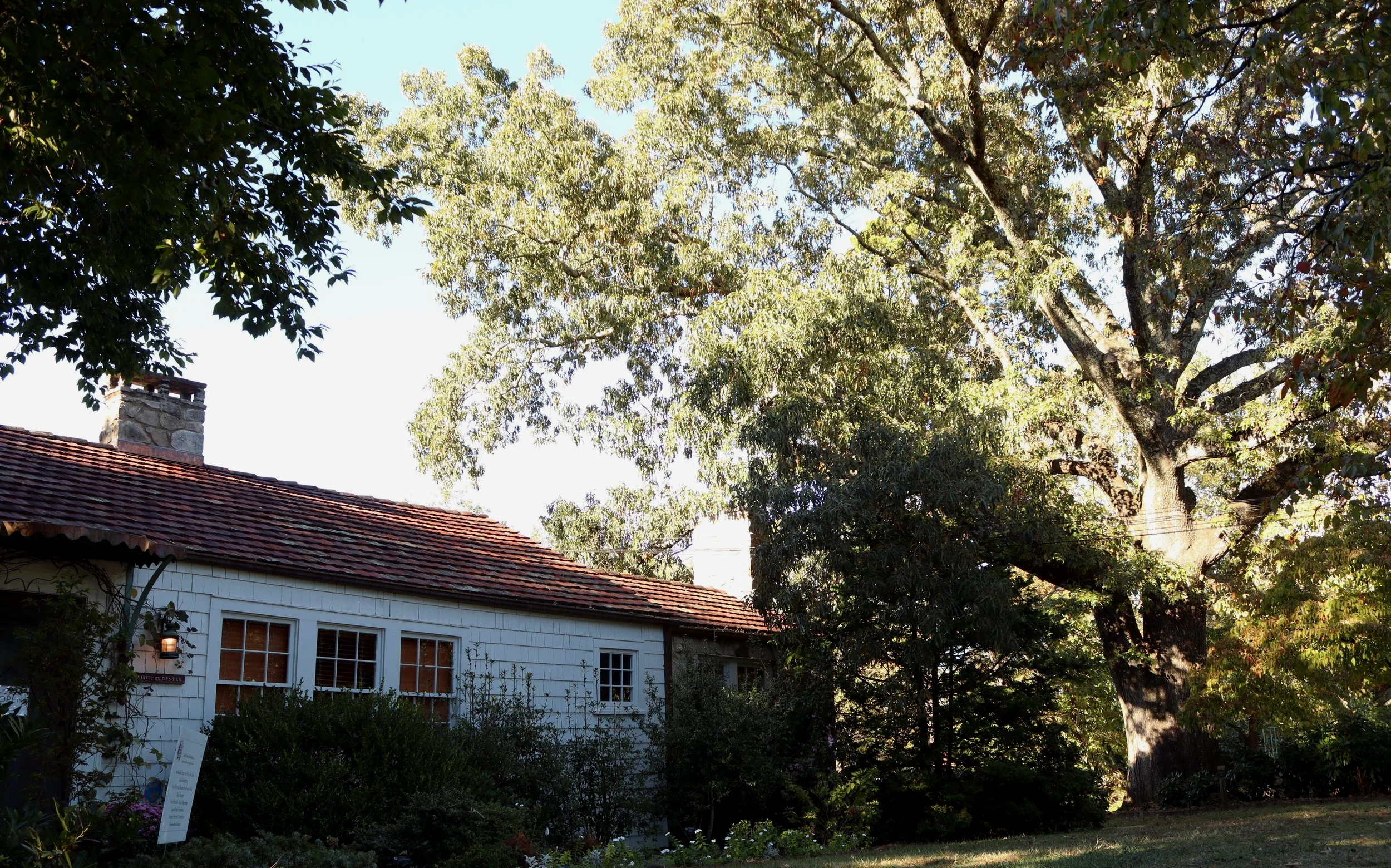
Have photos of the beautiful oak that you would like to share with us?
Please send them to info@knoxgarden.org